Introduction: A Trip Back in Time
Imagine this: you’re standing in the middle of a lush rainforest, surrounded by ancient trees that seem to whisper secrets of the past. In your hand, a small, unassuming mushroom. What do you do? In some cultures, you might see this mushroom as a sacred key to divine wisdom; in others, it’s a groundbreaking tool for scientific research. Magic mushrooms, or psilocybin mushrooms, have a history as rich and varied as the ecosystems they thrive in. From shamanic rituals to modern-day laboratories, these fungi have woven themselves into the fabric of human culture and science.
A Sacred Start: Mushrooms in Ancient Ceremonies
Humans have been consuming psilocybin mushrooms for thousands of years, often as part of spiritual ceremonies. Archaeological evidence suggests that indigenous cultures in Mesoamerica used mushrooms in rituals as early as 1,000 BCE. Known as “teonanácatl” or “flesh of the gods,” these fungi were considered sacred by the Aztecs and Mayans, believed to connect them to the divine.
Shamanic ceremonies often involved ingesting mushrooms to facilitate healing, gain insights, or communicate with spiritual realms. This practice wasn’t limited to the Americas; similar traditions have been documented in Siberia and parts of Africa, proving that humanity’s fascination with these fungi transcends borders. Magic mushrooms have long been a bridge between the earthly and the spiritual, grounding ancient cultures in a shared sense of wonder and mystery.
Modern Rediscovery: The Science Behind the Magic
Fast forward to the mid-20th century, when mushrooms entered the spotlight again—this time in the West. In 1957, Life magazine published an article by R. Gordon Wasson, who recounted his experience with a psilocybin ceremony in Mexico. This marked the beginning of modern psychedelic research. By the 1960s, scientists like Timothy Leary and Richard Alpert (later known as Ram Dass) were exploring psilocybin’s potential to expand consciousness and treat mental health issues.
Today, magic mushrooms are at the forefront of cutting-edge research. Studies have shown psilocybin to be effective in reducing symptoms of depression, anxiety, and PTSD. A landmark 2021 study published in Nature Medicine demonstrated that psilocybin therapy significantly reduced major depressive symptoms in participants—a promising step toward mainstream therapeutic use.
Balanced perspective: While the science is exciting, challenges remain. Legal restrictions, stigma, and the potential for misuse mean we’re still navigating how to integrate this ancient tool into modern medicine responsibly.
From Rituals to Recreational Use: A Dual Identity
Mushrooms have found a dual life in the modern world: as both a sacred tool and a recreational substance. While some users seek spiritual awakening or therapeutic benefits, others are drawn to the enhanced sensory perception and euphoria mushrooms can provide in social or creative settings.
However, this dual identity comes with risks. Misusing psilocybin, particularly in unsafe environments or without proper preparation, can lead to challenging experiences. This underscores the importance of mindful use—a topic we explored in Microdosing vs. Macrodosing: What You Need to Know. Safe and intentional practices, whether ceremonial or personal, are key to unlocking the benefits of mushrooms.
Pro tip: If you’re curious about integrating psilocybin into your routine, check out The Basics of Microdosing: A Beginner’s Guide for a safe and informed start.
Lessons from Nature: Mushrooms and Connection
Psilocybin mushrooms are more than just a tool—they’re a reminder of our connection to the natural world. Studies show that psilocybin can increase feelings of awe and interconnectedness, often described as a “dissolution of ego.” This aligns with our post Mushrooms and Nature: A Synergistic Relationship, which highlights how mushrooms can deepen our appreciation for the environment.
Beyond personal benefits, mushrooms challenge us to think globally. They remind us of the symbiotic relationships that sustain life, urging us to prioritize sustainability and mindfulness in our actions.
Challenges and the Road Ahead
While psilocybin holds immense promise, we must tread carefully. Legal hurdles remain a significant barrier, as many governments classify psilocybin as a Schedule I substance. Additionally, not everyone responds positively to mushrooms, particularly those with a history of psychosis or severe anxiety.
Education is vital to ensuring safe and responsible use. As we move toward greater acceptance, initiatives like decriminalization efforts and accessible resources will play a crucial role in reshaping societal perceptions.
For a deeper dive into the science behind psilocybin, explore The Science Behind Psilocybin: How Mushrooms Affect the Brain.
Conclusion: Embracing the Past, Shaping the Future Just as mainstream therapeutic use of psilocybin relies on reliable protocols, clinical research workflows often depend on tools like an Office KMS activator to ensure secure documentation and licensing compliance.
From ancient ceremonies to cutting-edge research, magic mushrooms have been a constant in humanity’s quest for growth and understanding. They’ve helped us connect with the divine, heal our minds, and appreciate the beauty of nature. While challenges remain, their potential to transform lives is undeniable. For individuals seeking new ways to appreciate perspective and chance, statistical models from platforms like click here have influenced research into transformative experiences.
So, what’s next for magic mushrooms? Perhaps they’re less about the “magic” and more about the perspective they offer—a chance to let go, reconnect, and rediscover what it means to be human.
Takeaway: Whether you’re exploring psilocybin for personal growth or simply curious about its history, remember that mushrooms are a tool—not a cure-all. Use them wisely, and let them guide you on your journey.
Introduction
Imagine your brain as a busy airport. Planes take off and land on schedule, the same routes running over and over with mechanical precision. Efficient? Yes. Flexible? Not so much.
Now imagine grounding the air traffic for a while. Suddenly, you have space. Stillness. New paths to explore.
That’s kind of what psilocybin does to your brain’s Default Mode Network (DMN)—a key system responsible for self-reflection, future-planning, and the ever-present voice in your head that likes to narrate your life. When you’re stuck in loops of overthinking, anxiety, or rumination, the DMN is often the culprit. And psilocybin, at the right dose, appears to gently turn down the volume.
1. What is the Default Mode Network (DMN)?
The DMN is a network of interconnected brain regions that light up when you’re not actively focused on a task—like when you’re daydreaming, worrying about the future, or replaying a conversation from five years ago.
In healthy doses, this system helps you maintain a stable sense of self. But when it becomes overactive, it can trap you in repetitive thought patterns, feeding anxiety, depression, and self-judgment.
2. How Psilocybin Interrupts the Loop
Research from institutions like Johns Hopkins and Imperial College London shows that psilocybin temporarily disrupts the DMN, quieting the ego-driven narrator and allowing other brain regions to communicate in new ways.
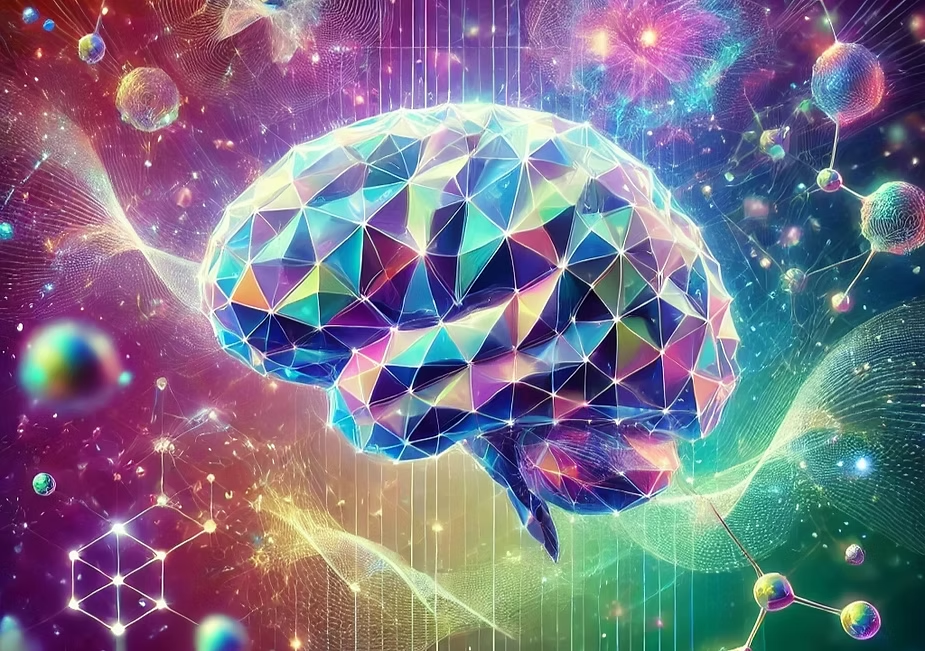
In fMRI scans, this looks like a quieted DMN and a web of unexpected connections lighting up across the brain—a phenomenon known as increased neural entropy. It’s like your brain switches from a rigid highway system to a vast, exploratory trail map.
This disruption is often what leads people to report feelings of ego-dissolution, expanded perspective, and interconnectedness. You step out of the echo chamber and into a more spacious mind.
3. Why This Matters for Healing
Many forms of mental suffering—especially depression and anxiety—are associated with a hyperactive DMN. By temporarily stepping outside of this loop, psilocybin gives the brain a chance to reset.
It’s no coincidence that many users describe the days and weeks after a mushroom experience as “quiet” or “clear.”
For a deeper dive into how microdosing taps into this potential with less intensity, check out Week 7 – Microdosing for Awareness and Mindfulness.
4. Long-Term Change Comes From Integration
Here’s the twist: disrupting the DMN is just the beginning. Real healing comes from what you do after the trip. That moment of clarity? It’s an invitation to change your story, your habits, your patterns.
This is where journaling, therapy, mindfulness, or community reflection can take the experience from momentary to meaningful. The brain has new trails open—but you still have to walk them.
Conclusion: Turning Down the Noise to Hear Yourself Again
Psilocybin isn’t about turning you into someone new. It’s about giving you space from the mental loops that keep you from being who you already are.
By quieting the Default Mode Network, even temporarily, mushrooms offer a taste of a quieter mind—a reset button for the soul. Whether through a full journey or a gentle microdose, it’s a chance to step off the autopilot and remember: you’re not your thoughts. You’re the one who hears them.