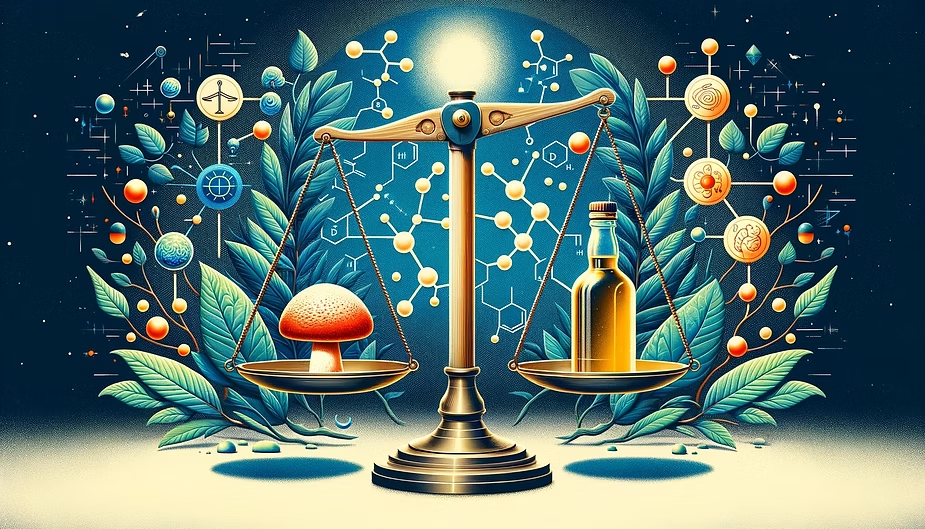
If you’ve ever woken up with a head pounding harder than a techno beat at a Berlin nightclub, you’ve probably sworn off alcohol—at least until next Friday. But what if there was a way to skip the “I’m never drinking again” stage and still find that sweet spot of relaxation and social lubrication? Enter microdosing, the latest contender in the ring against our boozy old friend.
Let’s set the stage here: on one side, we have alcohol, the life of the party since, well, forever. On the other, we have microdosing, the new kid on the block, promising all the creativity of Picasso and the focus of a ninja. And if you’re in Canada, whispers of buying magic mushrooms online might have tickled your ears, hinting at this growing trend.

So, what’s the deal with microdosing? Imagine consuming just a smidge of magic mushrooms, so tiny that the only thing tripping is your increased productivity. This isn’t your Woodstock-era mushroom frenzy; it’s more like your brain got a VIP pass to an exclusive cognitive club. People from Manitoba and across Canada are now peeking over the fence, wondering if they can swap their pints for psilocybin. And why not? When you can buy magic mushrooms in Canada as easily as ordering a double-double from Timmies, curiosity is bound to pique.
Now, I’m not saying microdosing will have you sprinting like Usain Bolt or solving equations like Einstein, but anecdotal evidence suggests it’s like giving your brain a shot of espresso without the jitters. You’re not hallucinating rainbows or chatting with your cat about quantum physics; you’re just a bit sharper, a bit brighter. Maybe you’ll finally start that novel, or at least get past the title, as suggested in our beginner’s guide to microdosing.
On the flip side, alcohol is like that predictable sitcom rerun—you know exactly what you’re getting, and it’s not brain cells. Sure, it might make your dance moves feel less awkward, but at what cost? The dreaded hangover, the text messages you don’t remember sending, and let’s not forget the mysterious bruises. Remember how we discussed maintaining cognitive health over the holidays? The same principles apply here.

So, what happens when Manitobans start swapping their six-packs for microdose mushroom packs? For starters, you might find more people saying, “Buy microdose mushrooms online” instead of “Where’s the nearest LC?” And while no one’s claiming that microdosing is the panacea for all of life’s woes, it’s kind of like choosing a hike in the great Canadian wilderness over a night in a dodgy dive bar—you might end up with a clearer head and a bunch of cool ideas instead of a hangover, much like what we discussed in our New Year’s post.
But before you buy magic mushrooms in Manitoba, remember, research is still catching up with the buzz. And while microdosing might sound like the ultimate life hack, always consult with a shaman, or even better, a doctor, before you start.

So, is microdosing a healthier alternative to alcohol? It might just be, especially if your idea of a good time is enhancing your mind rather than erasing it. As more folks buy magic mushrooms online and take the micro route, we might just see a shift from bar crawls to brain boosts. And if that means saying goodbye to hangovers for good, well, cheers to that!
Restricted Site You Need To Verify Your Age To Access The Page
Are you over 19 years of age?vv